
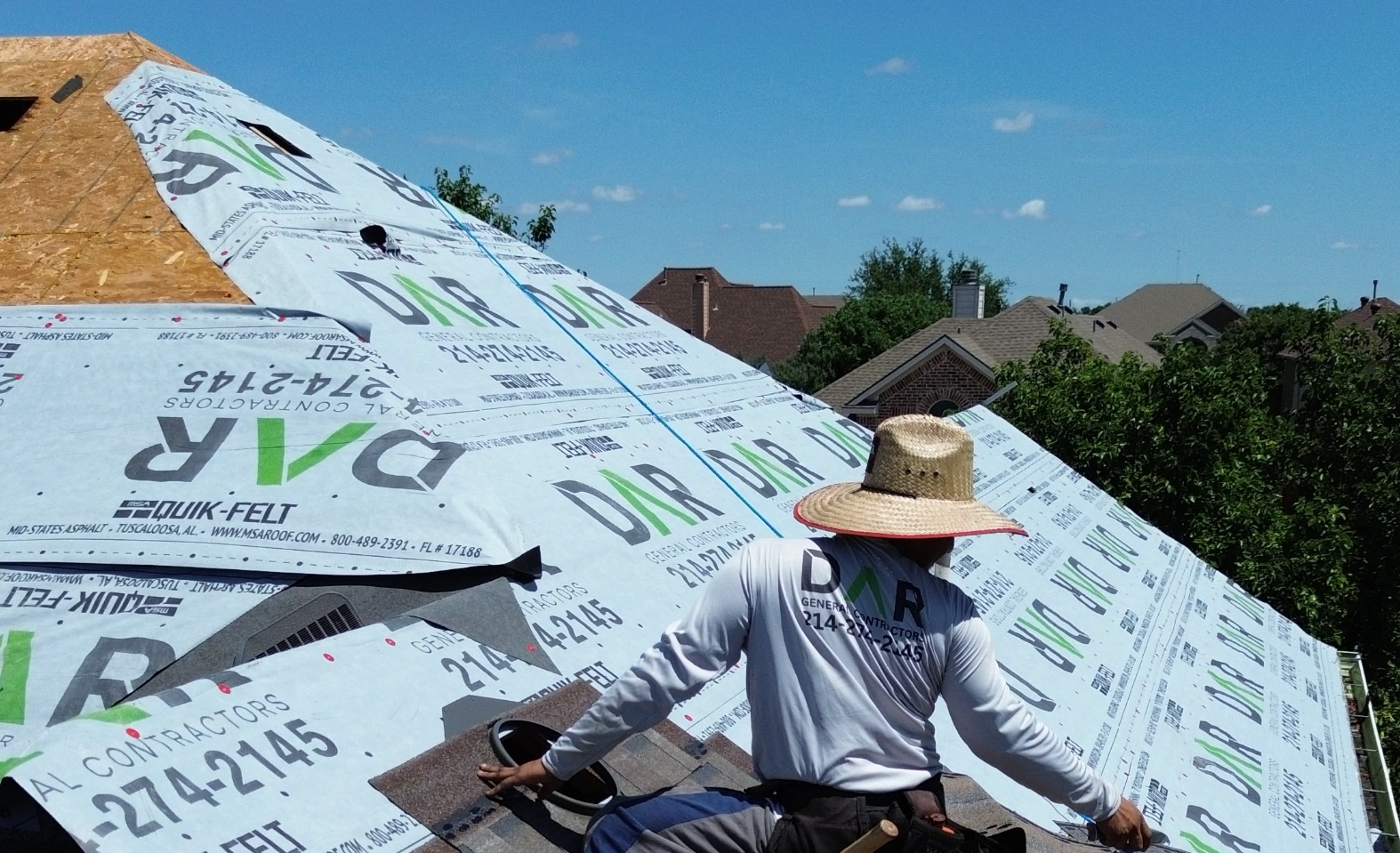
If you’re planning a roof replacement, timing matters more than most homeowners realize. All of the things like roofers available, the weather report in North Texas, and the insurance company’s schedule can influence the overall success of the roofing to the project. That’s why many homeowners ask about the best time of year to replace a roof in DFW before making a decision.
Unlike regions with mild, predictable seasons, DFW roofing weather can change fast. One week might be calm and sunny, while the next brings hail, high winds, or heavy rain. If the wrong time is chosen, there would be delays, swamping of work, or increased costs. On the other hand, if the right time is chosen, then there would be less complication and better installation conditions.
However, the reality is that there is no one month that is “perfect” for all houses. The roof of a house in Texas can be replaced so long as the temperature is warm enough, storms are not frequent and the condition of the roof is good. Some homeowners benefit from scheduling early. Others wait until off-peak months to avoid backlogs.
Thus, this guide provides a detailed analysis of DFW seasons and the explanation of weather impact on roof replacements throughout the year. By the end, you will have a clear picture of when it is most convenient for your home, your financial capacity, and your tranquillity to replace your roof.
How DFW Roofing Weather Impacts Roof Replacement Timing
When talking about the best time of year to replace a roof in DFW, weather is the biggest factor.
North Texas experiences extreme temperature swings. Summer seasons can be very hot, while spring and autumn are stormy times. Winter in this area is not as severe as in some states, yet still poses some surprises.
The following are some connections between weather conditions and roofing activities:
- Heat hardens the roofing materials and causes Installation Difficulty.
- Rain and storm increase the risk during and cause tearing-off roof.
- Periods impair the effectiveness of Adhesives and Shingle sealing.
Typical roofing components are made that they can operate perfectly only under certain temperature ranges. In the case of asphalt shingles, they can only seal properly during the warm but not extreme temperature period. That’s why many contractors prefer moderate conditions.
DFW roofing weather also affects scheduling. After major storms, roofing companies book up fast. Homeowners who wait too long after storm season often face longer wait times.
Understanding how Texas weather influences roofing helps you avoid rushed decisions and unnecessary stress.
Breaking Down the Roof Replacement Season in Texas
First, let’s examine the effect of different seasons on the roof replacement in DFW.
Spring (March–May)
Spring showers make the roof replacement season Texas homeowners experience the hardest.
Advantages:
- Mild weather
- Excellent sealing conditions for shingles
Disadvantages:
- Frequent storm activity
- Very high contractors’ demand
Indeed, spring storms frequently lead to revealing roof damages that were not previously felt. Many homeowners apply for roof replacement after hail or wind events that have attracted a lot of workers to the area and, thus, the race among them to be scheduled is on.
Summer (June–August)
Summer poses difficulties that are unique to DFW.
Pros:
- Increased daylight hours
- Drying times shortened
Cons:
- Very hot weather
- Fatiguing of workers
- Material wear and tear
Roof replacements can still be done safely, but crews must work carefully. For some homeowners, summer is not the best time of year to replace a roof in DFW unless damage requires immediate action.
Fall (September–November)
Fall is often the season that gives the most balanced effect.
Advantages:
- Cooler weather
- Less stormy weather
- Best conditions for installation
Disadvantages:
- High demand due to ideal weather
Many professionals agree fall offers some of the best conditions for roof replacement, making it a popular choice.
Winter (December–February)
Winter is underrated in North Texas.
Pros:
- Shorter wait times
- Flexible scheduling
Cons:
- Occasional cold snaps
- Weather unpredictability
For homeowners with flexibility, winter can be a smart option if temperatures remain within manufacturer guidelines.
Real-World Timing Scenarios for DFW Homeowners
Every home situation is different. Here are common scenarios.
Scenario 1: Storm-damaged roof
In case your roof leaks or has storm damage that is visible, waiting for the “perfect” season is not realistic. Rather, in such situations, the replacement should be done immediately and not depend on the timing.
Scenario 2: Aging roof with no leaks
Homeowners planning ahead often target fall as the best time of year to replace a roof in DFW. Scheduling early avoids peak-season backlogs.
Scenario 3: Selling a home soon
If you are getting ready to sell, then it is better to time your replacement just before the listing—no matter the season—so you can avoid inspection problems and buyer’s delay of decision.
The best timing still depends on urgency, roof condition, and long-term plans.
Frequently Asked Questions: Best Time of Year to Replace a Roof in DFW
1.) What month is best to replace a roof in DFW?
October and November are usually the best months for this, as the weather is not too hot and there is a low chance of storms.
2.) Is summer a bad time for roof replacement?
Not necessarily. Summer replacements are common, but heat can slow work and affect comfort.
3.) Can roofs be replaced in winter in Texas?
Yes. As long as temperatures meet manufacturer requirements, winter replacements are possible.
4.) Why is spring so busy for roofers?
Storm damage drives demand, making spring one of the busiest times in the roof replacement season Texas homeowners see.
5.) Should I wait for a specific season if my roof is leaking?
No. Active leaks should be addressed immediately, regardless of season.
Choosing the Right Season for Roof Replacement in DFW
So, what’s the best time of year to replace a roof in DFW?
For many homeowners, fall is the best time to install new windows because the weather is good, the schedule is good, and the work is done well. Spring is also a good time, but storms can make things more difficult. If you plan ahead, both summer and winter can be good times.
Your roof’s condition is more important than the calendar. If you wait too long, the inside of your home could get damaged and the repairs could cost more. If you plan ahead, you can pick the right season instead of having to deal with emergencies.
If you’re not sure when to replace your roof, a professional roof inspection can help you figure out when it’s best to do so based on your roof, your home, and the current DFW roofing weather.

